When you compare private jet vs airline pet transport, the decision is not about luxury. It is about control, risk exposure, compliance, and outcome predictability. At Pearl Lemon Jets, we work with high-net-worth individuals, relocation firms, and international executives moving pets across London, Dubai, New York, Singapore, Paris, and beyond.
Commercial airline pet transport systems are built for volume. Private aviation is built for control. That distinction defines everything from safety protocols to stress levels and regulatory handling.
If you are evaluating pet travel options across international routes, this breakdown gives you clarity on cost, risk, compliance, and operational certainty.
Schedule a Consultation
Our Services
We operate as the coordination layer behind high-value pet travel decisions. When clients compare private jet vs airline pet transport, they are not just choosing a flight. They are choosing a risk profile, a compliance pathway, and a level of control over every stage of the journey.
Private Jet Pet Travel Planning & Execution
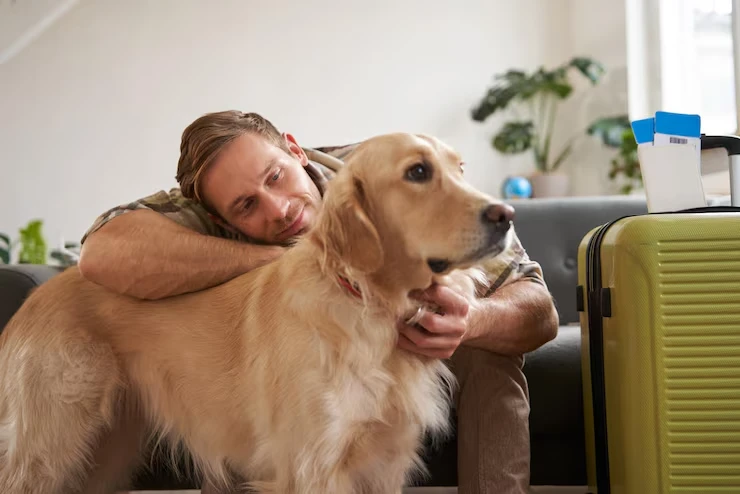
Private jet travel allows pets to remain in the cabin with their owners, regardless of size or breed. This removes the primary constraint imposed by commercial airlines, where most carriers restrict cabin access to pets under 8–10 kg, including carrier weight. Larger animals are automatically routed into cargo systems, introducing separation and additional handling stages.
We structure each flight based on aircraft range, cabin configuration, and the physiological needs of the animal. For long-haul routes such as Dubai to London or New York to Los Angeles, this includes planning for hydration, rest positioning, and noise exposure. For shorter intra-European routes such as Paris to Geneva, we prioritise rapid boarding and minimal ground time.
The direct benefit is control. There are no baggage systems, no third-party handlers, and no uncertainty around where the animal is at any point in time. Pets remain under continuous supervision, reducing anxiety triggers and eliminating the risk scenarios associated with cargo transport.
Airline Cargo Risk Assessment & Mitigation Strategy
Commercial airline pet transport operates under structured frameworks, but those frameworks are built for scalability rather than individual control. Pets transported as cargo move through systems that include loading teams, holding areas, and transfer processes, each introducing variables that cannot be directly managed by the owner.
We evaluate airline-specific protocols, including live animal handling certifications, temperature control capabilities, and seasonal embargo policies. Certain routes, particularly those involving extreme climates such as the Middle East to Europe during the summer months, carry an elevated risk due to heat exposure restrictions.
Our role is to identify acceptable airline options when private aviation is not selected and to reduce exposure to known failure points. This includes selecting direct flights over multi-leg journeys and avoiding high-traffic hubs where delays are more likely.
Global Pet Relocation Compliance Management
International pet transport is governed by strict regulatory frameworks that vary by country. Entry requirements often include microchipping, rabies vaccinations, health certificates, and, in some cases, quarantine periods. Failure to meet any single requirement can result in denied entry or extended holding times.
We coordinate compliance across major jurisdictions, including the UK, EU member states, the United States, the UAE, and Singapore. Each destination has its own documentation structure, timelines, and approval authorities.
For example, UK entry requires alignment with DEFRA regulations, while the United States involves USDA endorsement processes. In markets like Australia and Singapore, quarantine protocols can add additional complexity.
By managing documentation end-to-end, we reduce the risk of administrative rejection and ensure that pets clear border inspections without delay. This is particularly critical for clients relocating across continents, where timing and coordination impact both travel plans and business schedules.
Stress Reduction & Animal Welfare Control Systems
Airline cargo environments are pressurised, but they still expose animals to unfamiliar noise levels, separation from owners, and limited supervision during transit. These conditions can increase stress, particularly for sensitive breeds and older animals.
Private aviation removes these variables by maintaining a controlled cabin environment where pets remain close to their owners. Temperature, lighting, and noise conditions are consistent throughout the flight, and adjustments can be made in real time.
This level of control is especially important for brachycephalic breeds, which are more susceptible to respiratory issues under stress. It also benefits animals with prior travel anxiety or medical considerations.
From a welfare perspective, reduced stress correlates with better post-flight recovery and lower risk of complications. This is not a subjective benefit. It is a measurable improvement in animal condition upon arrival.
Multi-City and Long-Haul Route Structuring
Complex travel itineraries increase the likelihood of delays, missed connections, and extended holding times. Each additional stop introduces another layer of handling and another opportunity for disruption.
We design routes that minimise these risks by prioritising direct flights or limiting connections to controlled environments. For global routes such as Singapore to Sydney or London to New York, this can reduce total travel time by up to 40%.
Fewer stops also mean fewer transitions between handlers, which directly reduces the chance of errors. In airline cargo scenarios, this is one of the most critical variables affecting outcome reliability.
Route structuring also considers regulatory checkpoints, ensuring that documentation aligns with each jurisdiction along the journey. This prevents issues during transit stops where compliance requirements may differ from the final destination.
Shared Charter Cost Structuring for Pet Flights
Cost is often the primary objection when evaluating private jet pet travel. Full aircraft charter can be significant, particularly for long-haul routes. However, shared charter models provide an alternative that reduces financial exposure while maintaining the benefits of in-cabin travel.
By grouping clients with similar routes and timelines, costs are distributed across multiple passengers. This makes private aviation accessible for routes such as New York to London or Dubai to Paris, where demand for pet travel is high.
Empty-leg flights also present opportunities for reduced pricing, although they require flexibility in scheduling. These flights occur when an aircraft is repositioning without passengers and can be secured at a lower cost.
Demand for private pet travel has increased significantly in recent years, reflecting a shift in how high-value clients prioritise animal welfare and travel control.
Airline Pet Transport Advisory & Booking Oversight
Airline policies for pet transport vary widely, even within the same carrier across different routes. Misclassification of a booking or incorrect crate specifications can result in last-minute rejection at the airport.
We manage airline selection, booking classification, and crate compliance to ensure alignment with carrier requirements. This includes distinguishing between excess baggage transport and manifest cargo, each of which has different handling procedures.
Crate specifications are verified against IATA Live Animal Regulations, including size, ventilation, and material standards. Failure to meet these requirements is one of the most common causes of transport disruption.
By overseeing the booking process, we reduce the likelihood of operational errors and ensure that pets are accepted for transport without complications.
End-to-End Pet Travel Orchestration
Pet transport involves multiple stakeholders, including veterinarians, airlines, regulatory bodies, and ground handlers. Without coordination, this creates fragmentation and increases the risk of miscommunication.
We act as the single coordination point across all parties, maintaining visibility over every stage of the journey. This includes scheduling veterinary appointments, managing documentation timelines, and aligning flight logistics.
The result is a unified process where every component is aligned to the same objective. Clients are not required to manage multiple vendors or reconcile conflicting requirements.
This model reflects a broader principle: the more moving parts we control, the lower the overall risk profile. For international pet travel, that control is the difference between a smooth journey and a costly disruption.
Book a Strategy Consultation Today
Our Expertise

When clients compare private jet vs airline pet transport, the real decision is about risk ownership.
We operate on four principles:
- Single-point accountability across all stages
- Route-specific risk modelling for each journey
- Compliance-first planning aligned to international regulations
- Animal welfare prioritisation over cost-driven shortcuts
Industry Statistics That Matter
- Over 4 million pets travel by air annually worldwide
- Airline incidents still occur, including deaths and injuries, each year
- More than 250 pet deaths were reported over a decade in airline transport
- Private aviation demand for pet travel has increased significantly since 2019
Schedule a Consultation
FAQs
Is private jet pet transport safer than airline cargo?
Private jets remove cargo handling risks entirely. Pets remain in the cabin, eliminating exposure to temperature fluctuations and handling errors.
Can large dogs travel in airline cabins?
No. Most airlines restrict cabin travel to small pets under specific weight limits. Larger animals are transported as cargo.
Are airline cargo holds safe for pets?
They are pressurised and regulated, but risks still exist due to handling, delays, and environmental factors.
What is manifest cargo vs checked pet travel?
Manifest cargo treats the pet as an independent shipment with tracking and specialised handling, while checked travel links the pet to passenger baggage systems.
How much does private jet pet travel cost?
Costs vary based on route, aircraft, and whether the flight is shared or exclusive. Shared charters significantly reduce per-passenger pricing.
Which routes benefit most from private pet transport?
High-demand international routes such as the UK to the USA, the UAE to Europe, and Asia to Australia benefit due to strict airline restrictions and long flight durations.
How long does international pet transport take to arrange?
Typical timelines range from 2 to 8 weeks, depending on vaccination schedules, permits, and destination country requirements.
Are there breed restrictions for airline travel?
Yes. Many airlines restrict snub-nosed breeds due to respiratory risk during cargo transport.
Can pets travel without their owners on airlines?
Yes, via manifest cargo, but this increases complexity and reduces direct oversight.
Control the Outcome Before You Book
Every decision in pet transport comes down to one question: Who controls the variables?
Airlines operate on standardisation.
Private aviation operates under control.
If your priority is cost alone, airline cargo may be acceptable.
If your priority is risk reduction, compliance certainty, and animal welfare, the answer is different.
across global routes.